
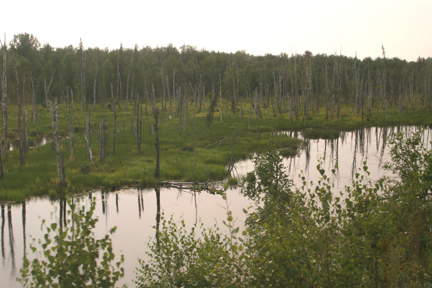
Black spruce, southern Alaska
Bioimages home (click on an image to enlarge)
view
this page in its intended navigation context
Cook Inlet taiga
(WWF
ecoregion NA0603)
Black spruce, southern Alaska
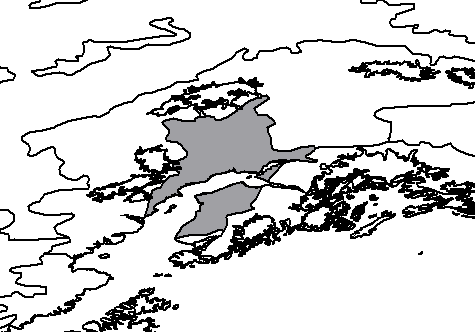
Source of bioregions data:
Olson, D. M. and
E. Dinerstein. The Global 200: Priority ecoregions for global conservation. (PDF
file) Annals of the Missouri Botanical Garden 89:125-126.
Distinctiveness (1=highest,4=lowest): 4
(nationally important)
All top-level predators are present and its rivers support all five species of
Pacific salmon. It also harbors large populations of bald eagles and snow
geese.*
Conservation Status (1=most endangered, 5=most
intact): 5 (relatively intact)
Although this is the part of Alaska that is most heavily-impacted by humans, it
is still about 90% intact habitat. Threats include logging and mineral
extraction, and urban and residential development occurs near Anchorage and
Palmer-Wasilla.*
 Picea mariana (black spruce)
(c) 2004 Maurice J. Kaufmann
Picea mariana (black spruce)
(c) 2004 Maurice J. Kaufmann Picea glauca
(white spruce)
Picea glauca
(white spruce) Picea sitchensis
(Sitka spruce)
Picea sitchensis
(Sitka spruce) Populus tremuloides
(quaking aspen)
Populus tremuloides
(quaking aspen) Populus balsamifera ssp. trichocarpa
(black cottonwood)
Populus balsamifera ssp. trichocarpa
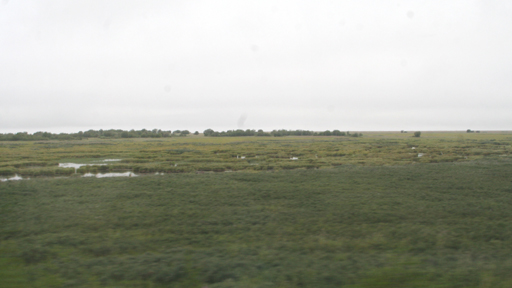
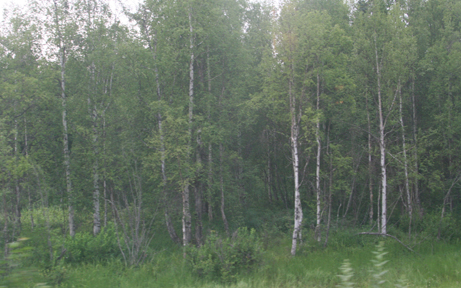
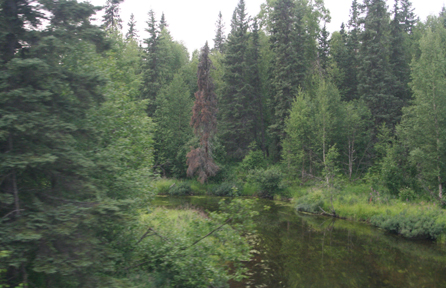
(black cottonwood)Some associated habitats

* Ricketts, T.H., E. Dinerstein, D.M. Olson, C.J. Loucks, et al. (1999) Terrestrial Ecoregions of North America: A Conservation Assessment. World Wildlife Fund - United States and Canada. Island Press, Washington, D.C. pp. 353-355.
Images copyright 2010 Steve Baskauf - Terms of use